EU: The AI Act arrives on 2 August. What does it mean?
Founder Notes from an evening at AWS Berlin: what really applies on 2 August 2026, what was delayed, and what founders should do now.
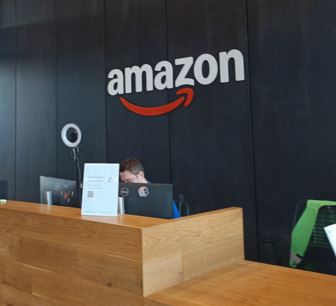
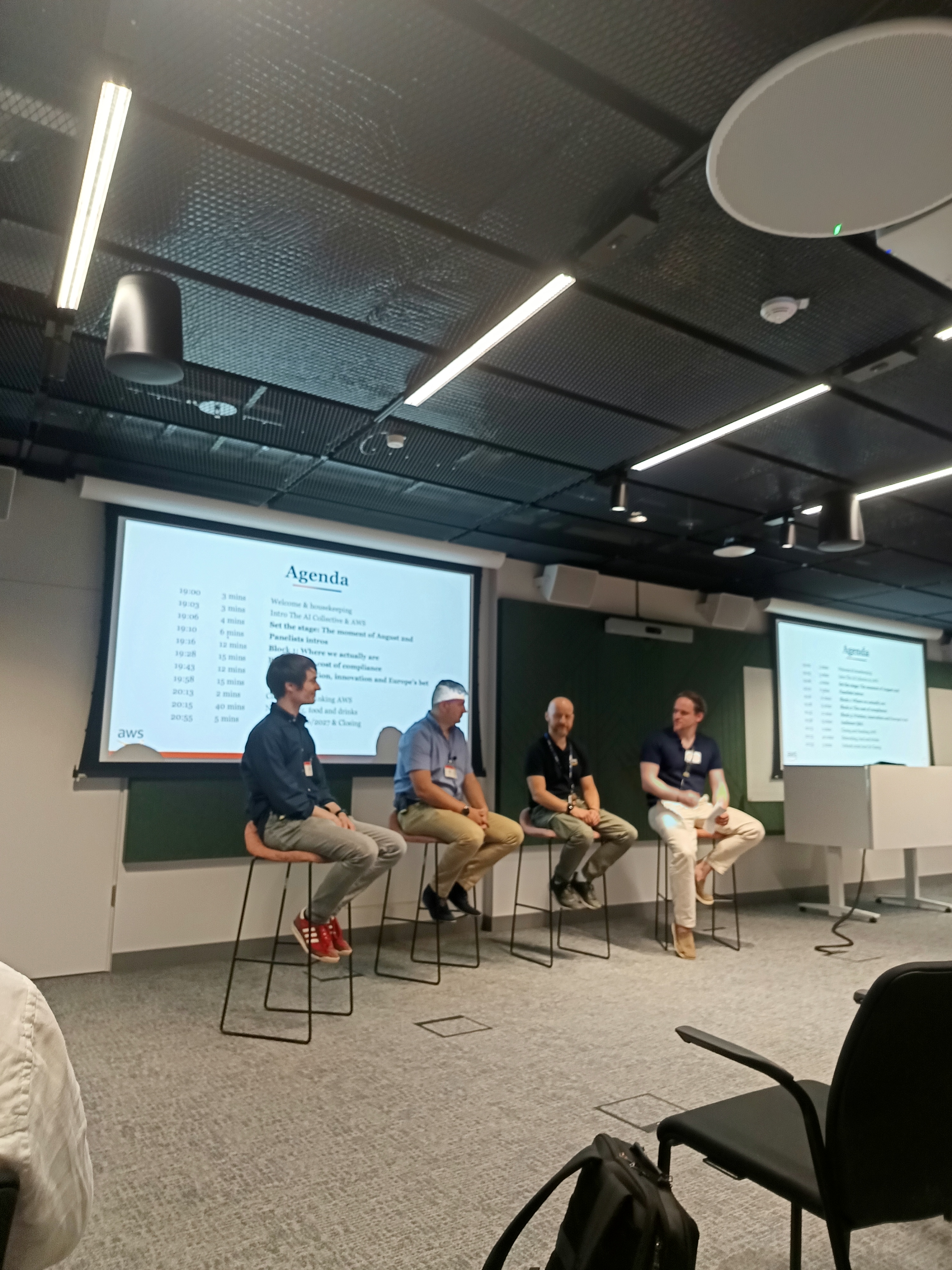
On 30 July I spent the evening at the Amazon Tower in Berlin, at the AI Act, Day One: Building and Scaling Under Europe's New Rules — co-hosted by AWS and The AI Collective. The timing was not an accident. On 2 August the next phase of the EU AI Act becomes applicable, and the room was full of founders, engineers and enterprise teams trying to answer the same question: what does this actually mean for the things we are building?
Here are my notes, the facts I verified afterwards, and where I think the critical thinking should happen.
What actually applies on 2 August 2026
There is a lot of noise around this date, so it is worth being precise. Three things arrive now:
Transparency obligations. If your product lets people interact with an AI system, they must be able to tell. AI-generated content must carry machine-readable marking, deepfakes must be disclosed, and deployers using emotion recognition or biometric categorization must inform the people affected. For systems already on the market there is a grace period for content marking until 2 December 2026, but anything launched from August must comply from day one.
Enforcement. National market surveillance authorities get their powers, and the penalty framework applies. Until now the AI Act was largely a law without a police force. That changes.
General-purpose AI enforcement begins. The obligations for general-purpose AI providers have applied since August 2025, but from 2 August 2026 the Commission can actually enforce them with fines. Models that were already on the market before August 2025 have until August 2027 to comply, a deadline set in the original Act.
Just as important is what does not arrive. Under the Digital Omnibus agreed in May this year, the high-risk obligations were postponed: December 2027 for standalone high-risk systems, August 2028 for AI embedded in regulated products.
The question I kept thinking about on the way home
Is the delay good news? My honest impression after the evening: it depends on who you are.
If you are an enterprise with a high-risk use case, you just received breathing room, and it is worth using. A theme that came up throughout the discussion is that the hard part is rarely understanding the regulation itself. It is aligning legal, security, engineering, procurement and product quickly enough.
If you are a startup selling trustworthy AI into Europe, the delay cuts both ways. The compliance moat you were building arrives later. But the transparency rules that do apply now are cheap for a small company to implement and expensive (depending on budget) for a large one to retrofit. That asymmetry looks like an opportunity to me.
And one reflection of my own, beyond anything said on stage: postponing rules because the standards are not ready is understandable, but it also means companies that invested early in compliance were, in a sense, penalized for moving first. Regulatory uncertainty is itself a cost, and I am curious how the ecosystem will price it in over the next year.
If you are a founder, do this now
The most practical advice of the evening was also the simplest. Do not start with the legal text. Start with your own product.
Map every feature where AI is involved, the user journey it sits in, and whether you act as provider or deployer in that moment. Put it in a matrix. Cross-check it against the transparency requirements and document your reasoning, even if the conclusion is that nothing applies to you. If a customer, investor or authority asks, that document is the difference between an afternoon and a quarter.
Two things I would underline from my own experience building an AI product in Berlin. First, using a mainstream model provider or cloud does not make you compliant by inheritance. Their obligations are theirs, yours are yours. Second, transparency is not a compliance tax. Users trust products that tell them what the AI is doing. We made approval-first design the core of Startup Global for exactly that reason, long before any regulator asked.

Resources worth your time
These are the sources I used to verify the dates and claims in this post:
European Commission: the AI Act regulatory framework is the official overview and the place to check dates against the source.
The AI Act Explorer lets you search the full text by article, which is more useful than any summary once you have your feature matrix.
Norton Rose Fulbright: when does the AI Act become enforceable now is a clear July 2026 summary of what the Digital Omnibus changed.
Sidley: preparing for the transparency obligations goes deep on exactly the rules that apply from 2 August.
Where Startup Global fits in this
We are building Startup Global for exactly the companies this regulation is about: small and medium businesses that want AI doing real work without losing control of it. AI employees that run your website, WhatsApp, CRM and marketing in different languages, where nothing leaves your company without your approval. GDPR-first, built in Berlin, with transparency as the default rather than a retrofit.
We are opening access through a founding wishlist. Members lock the launch price and get in before the public launch.

Thomas Roeder is the co-founder of Startup Global and managing director of Röder TomorrowTechnologies UG (haftungsbeschränkt) in Berlin. This post reflects his personal notes from a public event and is not legal advice.